

Role of High-Speed Automated Doors in Preventing Cross-Contamination
1. Rapid Opening/Closing Function
Speed: Operates at 0.6–2.5 m/s, significantly reducing the time doors remain open. This minimizes airborne particle ingress and maintains airlock integrity in clean zones.
2. Advanced Sealing Performance
Seal Types: Equipped with magnetic seals, triple-layer EPDM gaskets, or inflatable edges to ensure airtight closure, maintaining positive or negative pressure environments (per ISO 14644 standards).
Leakage Control: Limits air infiltration to <1 m³/h per square meter, critical for ISO Class 5–8 cleanrooms.
3. Touchless Automation
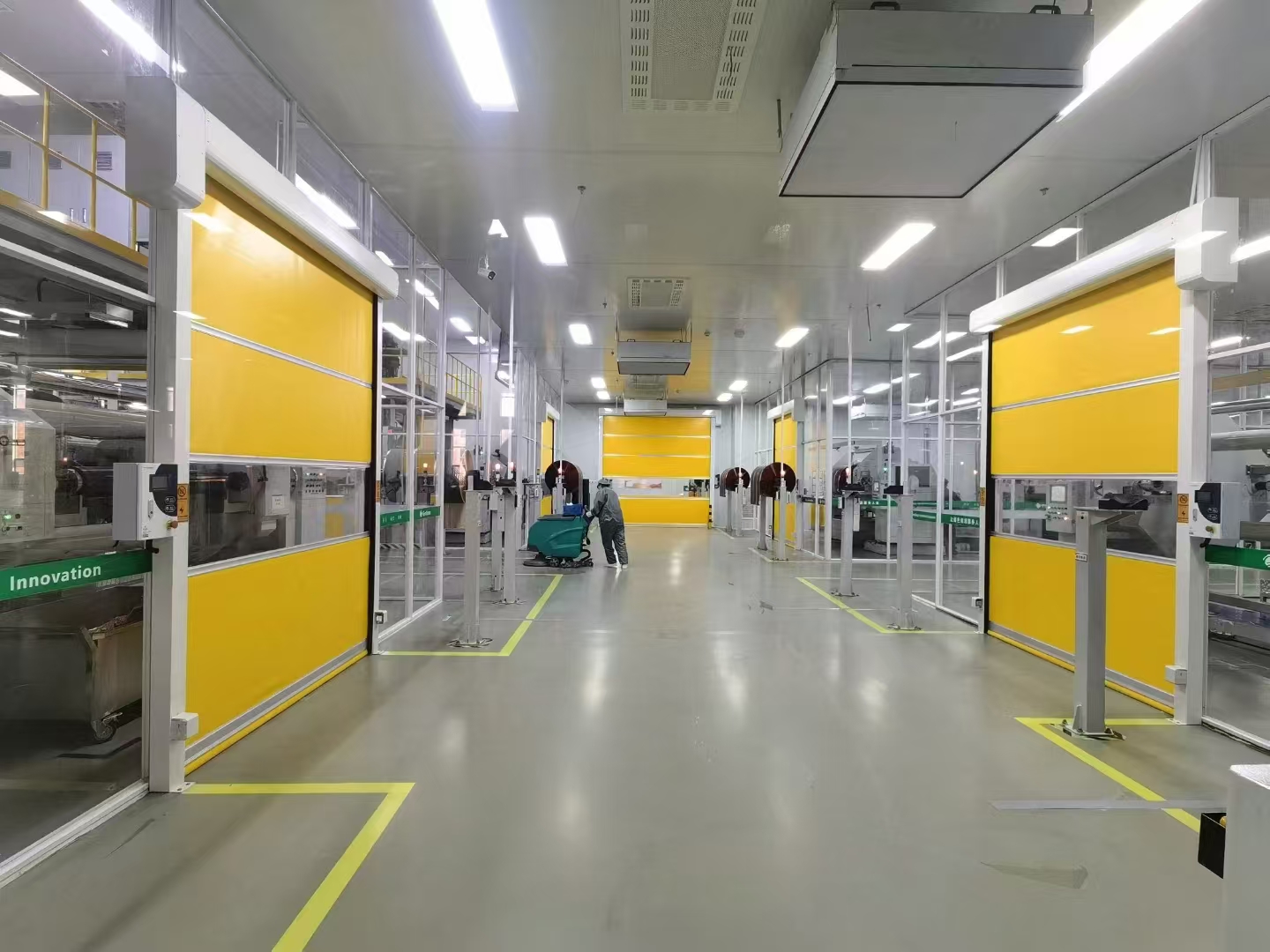
Sensor Integration: Radar, infrared, or motion sensors enable hands-free operation, minimizing human contact and contamination risks.
RFID/Access Control: Restricts entry to authorized personnel, reducing traffic in high-risk areas.
4. Air Curtain Systems
Barrier Creation: High-velocity airflow (15–25 m/s) forms an invisible shield during door openings, blocking external contaminants from entering sterile zones.
5. Hygienic Material Design
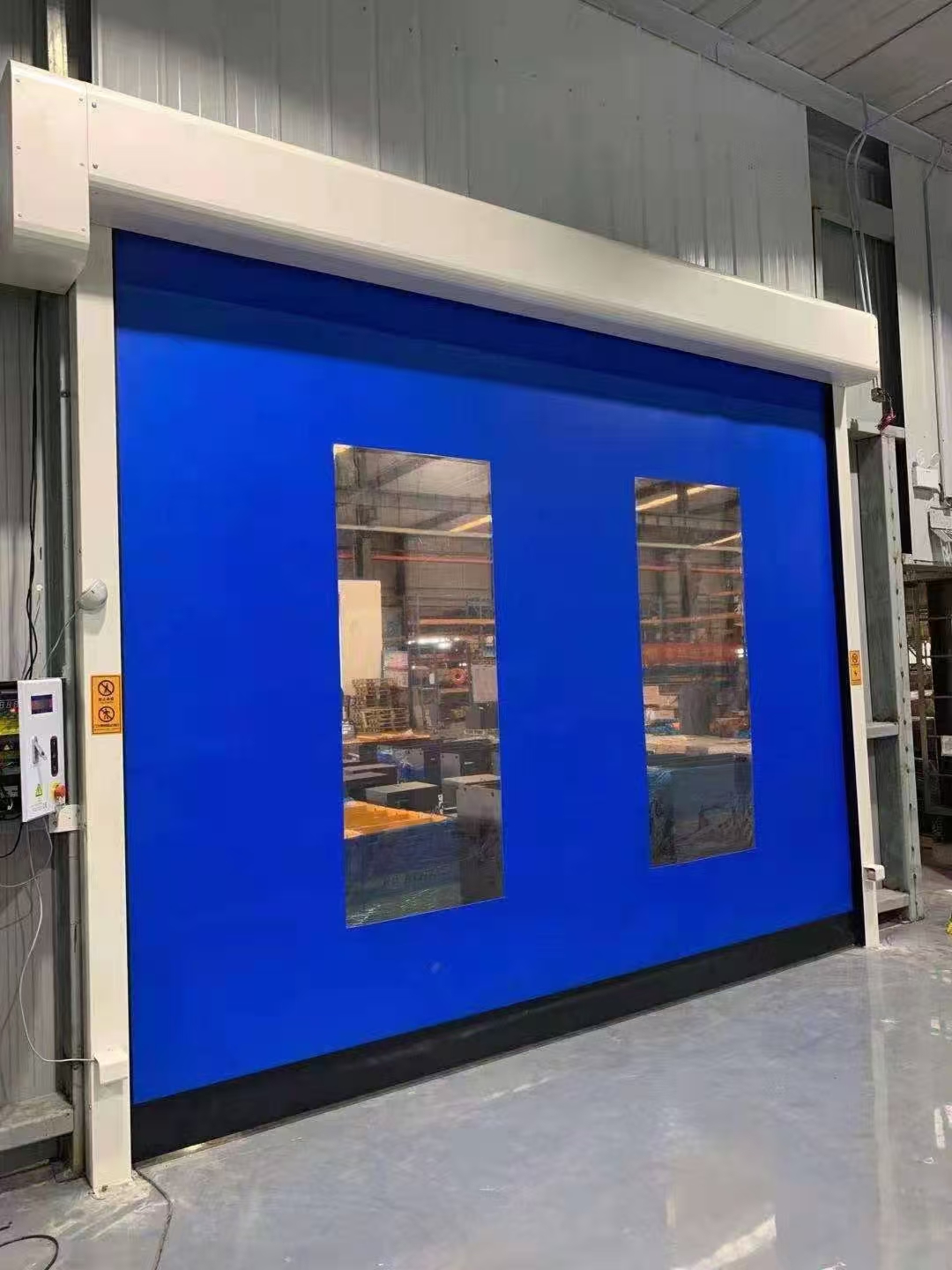
Non-Porous Surfaces: Stainless steel frames and PVC-coated curtains resist microbial growth and tolerate frequent cleaning with harsh disinfectants (e.g., ethanol, hydrogen peroxide).
Antimicrobial Coatings: Silver-ion or photocatalytic coatings inhibit bacterial colonization, compliant with FDA and EU GMP guidelines.
6. Interlock Systems
Sequential Access: Ensures only one door opens at a time in airlock chambers, preventing direct airflow between contaminated and clean areas.
7. Emergency Sealing
Fail-Safe Closure: Automatically seals during power outages or hazardous events (e.g., chemical spills), containing contaminants within isolated zones.
Applications in Critical Environments
Pharmaceutical Manufacturing: Protects sterile APIs (Active Pharmaceutical Ingredients) and filling lines.
Hospital Isolation Wards: Prevents pathogen spread in ICU or biosafety labs.
Food Packaging: Maintains HACCP compliance by blocking airborne particulates and pests.
Compliance and Standards
Certifications: CE (Machinery Directive), ISO 14644 (cleanroom performance), and EHEDG (hygienic design).
Validation: Documentation of DQ/IQ/OQ protocols to meet FDA 21 CFR Part 11 and EU Annex 1 requirements.
Conclusion
By combining rapid operation, precision sealing, and smart automation, high-speed doors serve as a frontline defense against cross-contamination. Their integration with facility control systems ensures compliance with stringent regulatory frameworks while optimizing operational efficiency in sensitive industries.
Q1: How do high-speed automated doors prevent cross-contamination?
A1: By opening and closing rapidly, these doors minimize air flow between areas, effectively blocking the transfer of dust, bacteria, or harmful particles. For example, in food factories or hospitals, they quickly separate clean zones from contaminated ones, reducing cross-contamination risks.
Q2: Where are these doors typically used?
A2: They are ideal for spaces with strict hygiene requirements, such as hospital operating rooms, pharmaceutical labs, food processing plants, and research facilities. These environments need quick isolation to prevent pollutants from spreading via air or personnel.
Q3: Does the door material help prevent contamination?
A3: Yes. Doors are often made of anti-bacterial, easy-to-clean materials (e.g., stainless steel or special coatings) with smooth, seamless surfaces to resist bacterial buildup and simplify disinfection.
Q4: Do they require regular maintenance?
A4: Yes. Regular checks of seals, sensors, and motors are essential to ensure proper closure. Poor maintenance may compromise sealing performance, reducing contamination control.
Recommended Products


up to date Automatic Door Accessories
- Safety Edge Sensor for Rapid Roll Door Anti-Crushing Protection
- High-Speed Door 0.75KW Servo Motor Control Box Set – Reliable & Efficient Drive Solution
- 1.5KW Servo Motor & Control Box Combination - High-Efficiency Drive System for Industrial Doors
- Industrial Door Zippers & High Speed Door Zippers - Durable Industrial Door Accessories
- 0.75KW High-Speed Door Servo Drive System - Reliable & Energy-Saving Industrial Solution
- Manufacturers Foot Pedal Activator & Safety Beam Photocell Barrier Sensor for Medical Sliding Doors
- Industrial Door Zippers & High Speed Door Zippers - Durable Industrial Door Accessories
- AOK-AC123 Electric Curtain Remote Control - Wireless Design with Wear-Resistant Acrylic Crystal Pane
- Permanent Magnet AC Synchronous Servo Motor with Worm Reduction Mechanism for High Speed Door
- Precision Synchronous Servo Motor for High-Speed Door – Worm Gear Reduction
- Durable PVC Fast Rolling Door Fittings for Enhanced Security
- Automatic Repair of Zipper Door Plastic/Polymer Rails
- Smart Automatic Door Sensor for Fast Rolling Access Control
- Soft Fast Gate Control System 1.5kw Servo Motor and Control Box
- Automatic Access Control Square Surface Mount Infrared Non-Contact Switch
- Explosion-Proof Reinforced Self-Limiting Electric Heating Belt
- Explosion-Proof Shielded Self-Controlling Temperature Electric Heating Belt
- Heating Belt for Anti-Freezing, Heating and Heat Preservation of Cold Storage Doors
- 40W flame retardant explosion-proof self-limiting electric heating belt
- Safety Beam Sensor Use for Automatic Door
