

How to Distinguish Between Rapid Doors and High-Speed Doors?
1. Definition and Functional Comparison
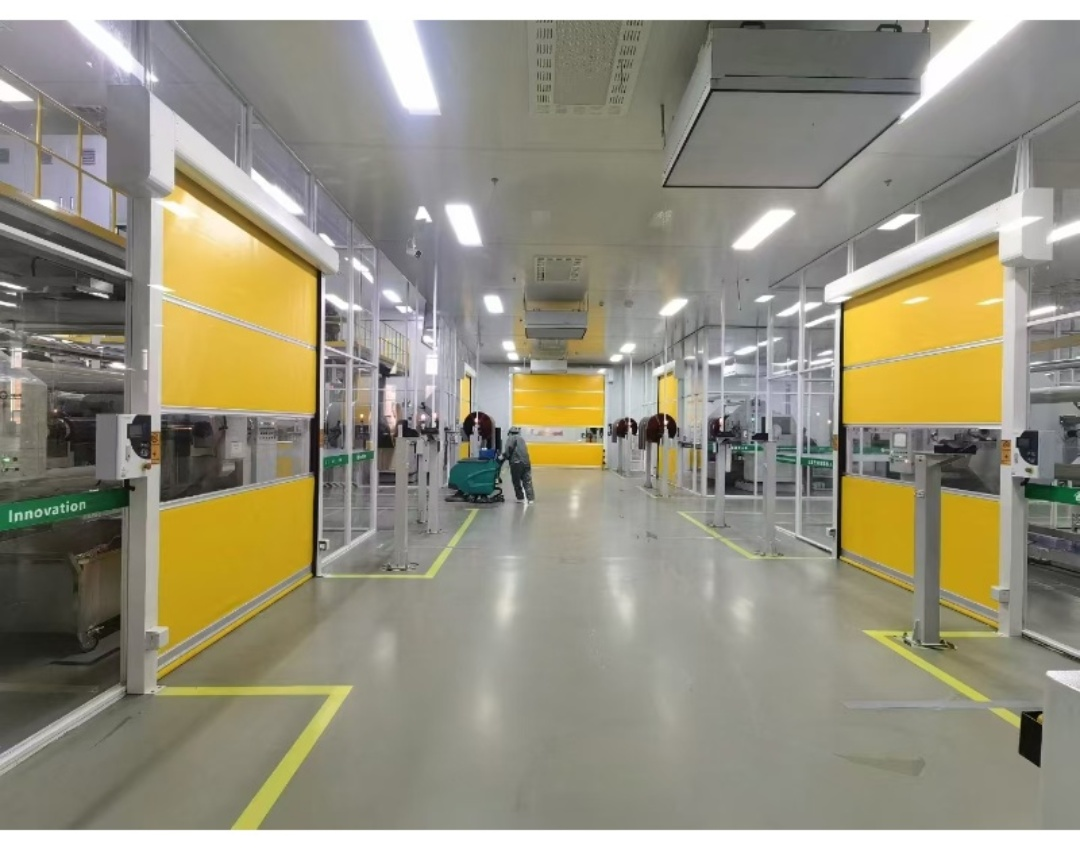
PVC Rapid Door: Operates at a speed of ≥0.6 meters per second, primarily designed for fast lifting and lowering, providing insulation, humidity control, dustproofing, insect resistance, and soundproofing. Suitable for industries such as food, pharmaceuticals, electronics, and logistics to maintain a constant temperature and clean workspace.
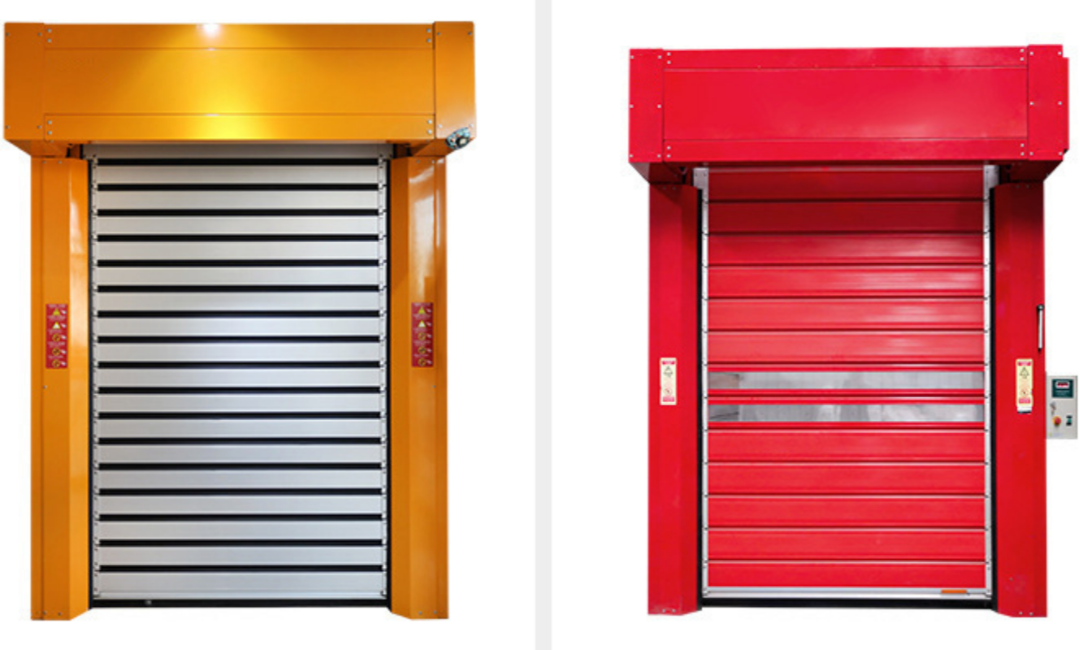
High-Speed Door: Also known as high-speed rolling doors, they offer additional features such as wind resistance, fireproofing, odor control, and light transmission, catering to high-efficiency logistics and ultra-clean environments. Commonly used in cold storage, precision manufacturing, and sterile production areas.
2. Differences in Application Scenarios
Rapid Door: Typically used in general industrial environments, such as assembly lines, packaging workshops, and warehouses, focusing on basic protection and energy efficiency.
High-Speed Door: More suitable for high-traffic or ultra-clean areas, such as cold chain logistics, electronics cleanrooms, and pharmaceutical production, emphasizing rapid opening/closing to minimize energy loss and contamination risks.
3. Key Performance Focus
Rapid Door: Balances speed and cost-effectiveness for standard industrial needs.
High-Speed Door: Prioritizes maximum efficiency (speeds of 1.5–2 m/s) and airtightness, often using high-strength materials (e.g., aluminum alloy + polyester fabric).
Frequently Asked Questions (FAQ)
Q1: What is the main difference between rapid doors and high-speed doors?A1: The core differences lie in speed and application. High-speed doors are faster (typically ≥1 m/s) and suit high-frequency, ultra-clean environments, while rapid doors (≥0.6 m/s) are more cost-effective for general industrial use.
Q2: How to choose between a rapid door and a high-speed door based on needs?A2: Opt for high-speed doors in high-traffic areas (e.g., logistics passages) or sterile zones (e.g., pharmaceutical labs). Rapid doors are sufficient for basic insulation or partitioning.
Q3: Are high-speed doors more expensive to maintain?A3: Yes. Due to higher motor and track loads, high-speed doors require regular maintenance, but their energy-saving benefits can offset long-term costs.
Q4: Are there safety differences between the two?A4: High-speed doors usually feature advanced safety sensors (e.g., infrared beams, light curtains) for quicker response, making them ideal for mixed pedestrian/vehicle zones.
Q5: Can both doors be used in low-temperature environments?A5: Yes, but they must be equipped with cold-resistant motors and materials (e.g., thickened PVC). High-speed doors, with better sealing, are more suitable for freezer rooms.
Recommended Products


up to date Automatic Door Accessories
- Safety Edge Sensor for Rapid Roll Door Anti-Crushing Protection
- High-Speed Door 0.75KW Servo Motor Control Box Set – Reliable & Efficient Drive Solution
- 1.5KW Servo Motor & Control Box Combination - High-Efficiency Drive System for Industrial Doors
- Industrial Door Zippers & High Speed Door Zippers - Durable Industrial Door Accessories
- 0.75KW High-Speed Door Servo Drive System - Reliable & Energy-Saving Industrial Solution
- Manufacturers Foot Pedal Activator & Safety Beam Photocell Barrier Sensor for Medical Sliding Doors
- Industrial Door Zippers & High Speed Door Zippers - Durable Industrial Door Accessories
- AOK-AC123 Electric Curtain Remote Control - Wireless Design with Wear-Resistant Acrylic Crystal Pane
- Permanent Magnet AC Synchronous Servo Motor with Worm Reduction Mechanism for High Speed Door
- Precision Synchronous Servo Motor for High-Speed Door – Worm Gear Reduction
- Durable PVC Fast Rolling Door Fittings for Enhanced Security
- Automatic Repair of Zipper Door Plastic/Polymer Rails
- Smart Automatic Door Sensor for Fast Rolling Access Control
- Soft Fast Gate Control System 1.5kw Servo Motor and Control Box
- Automatic Access Control Square Surface Mount Infrared Non-Contact Switch
- Explosion-Proof Reinforced Self-Limiting Electric Heating Belt
- Explosion-Proof Shielded Self-Controlling Temperature Electric Heating Belt
- Heating Belt for Anti-Freezing, Heating and Heat Preservation of Cold Storage Doors
- 40W flame retardant explosion-proof self-limiting electric heating belt
- Safety Beam Sensor Use for Automatic Door
