

Composition of High-Speed Door Curtain System: A Comprehensive Analysis and Application Guide
1. Main Frame Structure of High-Speed Doors
The frame structure of a high-speed door typically consists of the following core components:
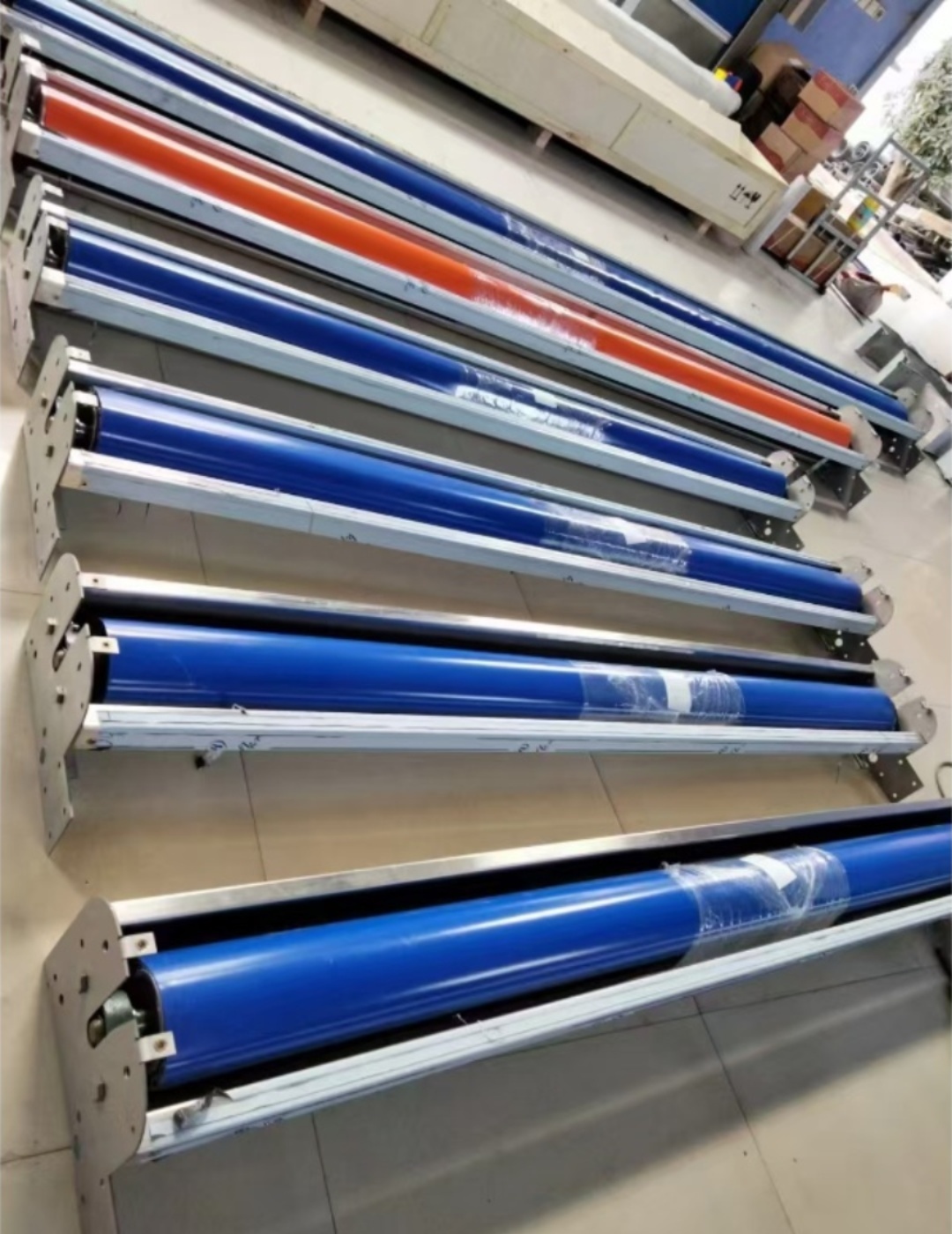
(1) Door Curtain System
The door curtain is the core component, directly affecting durability and sealing. Common materials include:
PVC High-Strength Fabric: Tear-resistant and wear-resistant, suitable for general industrial environments.
Polyester-Coated Fabric: Dustproof and anti-static, ideal for cleanrooms (e.g., food and pharmaceutical industries).
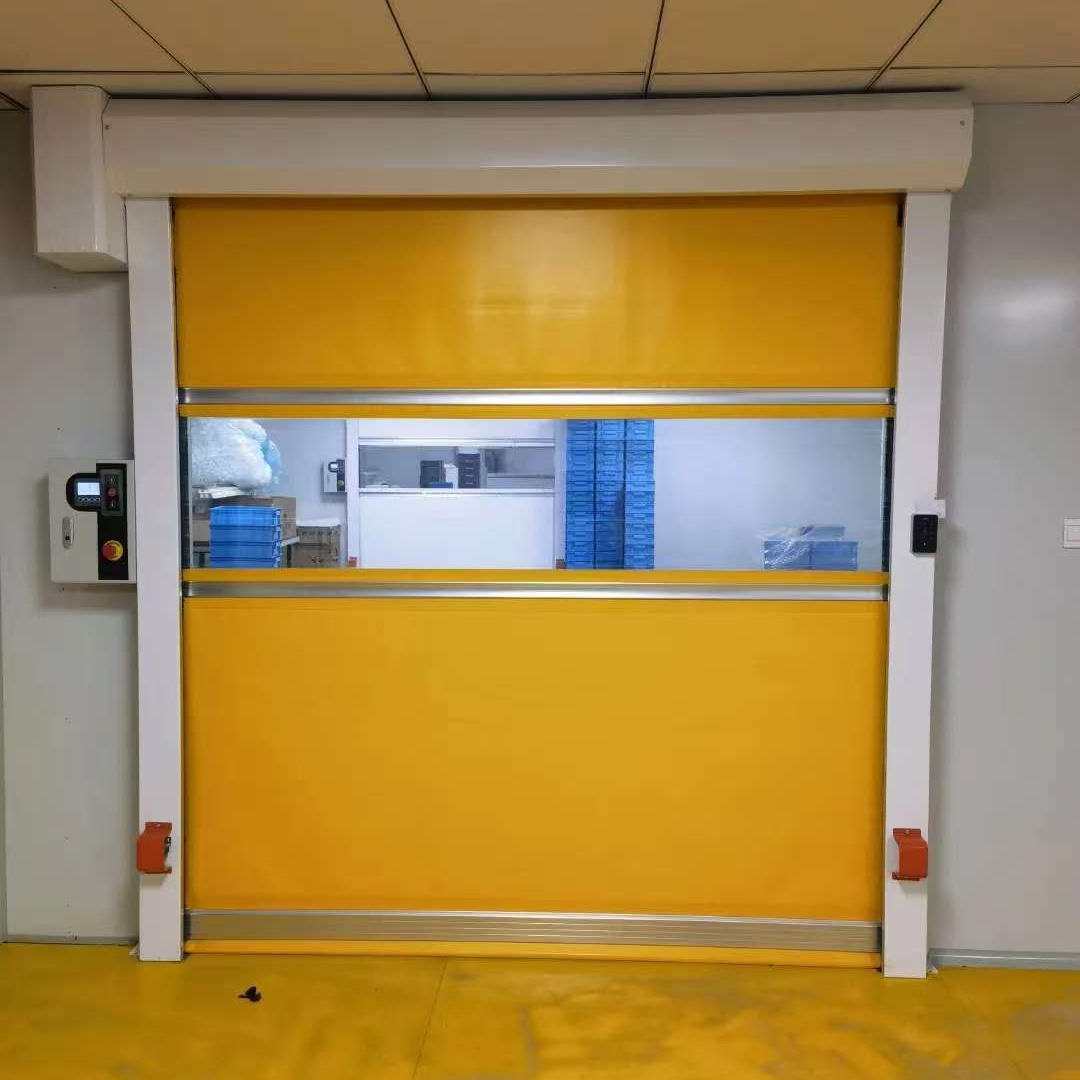
Transparent Window Design: Allows visibility for improved safety.
Key Parameters:
Thickness: 0.8mm–1.2mm
Wind Resistance: Up to Level 12 (approx. 32.7 m/s)
Lifespan: ≥500,000 open/close cycles
(2) Drive System
The drive system determines opening/closing speed and typically uses:
Servo Motor: High-precision control, speeds up to 1.5–2.5 m/s.
Frequency Inverter Control: Ensures smooth acceleration/deceleration, reducing mechanical stress.
Benefits:
Improved Logistics Efficiency: In warehouses, high-speed doors reduce vehicle wait times, increasing throughput by over 30%.
Energy Savings: Rapid closing minimizes air exchange, cutting HVAC energy consumption by ~20%.
(3) Track and Guide System
The track ensures smooth door movement. Common types include:
Aluminum Alloy Track: Lightweight and corrosion-resistant, ideal for indoor use.
Stainless Steel Track: Highly rust-resistant, suitable for humid or corrosive environments (e.g., cold storage, chemical plants).
Critical Parameters:
Track Width: Typically 100–150mm
Guide Rail Precision: ≤1mm deviation to prevent jamming
(4) Safety Protection System
Safety is critical for high-speed doors, with features such as:
Infrared Photoelectric Sensors: Detect obstacles and trigger automatic reversal to prevent injuries.
Bottom Safety Edge: Stops and reverses upon contact with obstructions.
Emergency Stop Button: Manual override for sudden hazards.
Applications:
Automotive Manufacturing: Prevents collisions with robotic arms.
Food Processing Plants: Blocks unauthorized access to hazardous zones.
(5) Control System
Modern high-speed doors often feature smart control systems:
PLC (Programmable Logic Controller): Supports multiple modes (manual, automatic, remote).
Network Connectivity: Integrates with factory MES for intelligent management.
2. Typical Applications of High-Speed Doors
| Industry | Recommended Door Type | Key Requirements | Benefits |
|---|---|---|---|
| Logistics & Warehousing | High-Speed PVC Door | Frequent cycling, wind resistance | Faster loading/unloading, lower energy loss |
| Pharmaceutical Cleanrooms | Anti-Static Door | Sealed, easy to clean | Complies with GMP, reduces contamination risk |
| Food Processing | Stainless Steel Track Door | Corrosion/mold resistance | Longer lifespan, ensures hygiene |
| Parking Garages | Transparent Window Door | High visibility, impact resistance | Enhances safety, reduces accidents |
3. Why Optimize High-Speed Door Frame Structure?
Lower Maintenance Costs: High-quality tracks and drives reduce failure rates, cutting annual maintenance costs by 40%.
Higher Productivity: 1.5 m/s operation is 3x faster than traditional doors, minimizing logistics delays.
Enhanced Safety: Dual protection (sensors + safety edge) reduces workplace accidents by 90%.
Frequently Asked Questions (FAQ)
Q1: How long do high-speed doors typically last?
A: Under normal conditions, a high-quality high-speed door lasts over 500,000 cycles. At 500 cycles/day, this equals ~3–5 years.
Q2: Can high-speed doors operate in freezing temperatures?
A: Yes, but they require cold-resistant curtains (rated for -30°C) and frost-proof motors, such as those used in cold storage.
Q3: How do high-speed doors withstand strong winds?
A: Choose windproof designs (e.g., reinforced aluminum tracks + multi-point anchoring) with a wind resistance rating up to Level 12.
Q4: Are high-speed doors suitable for outdoor installation?
A: Yes, but they need waterproof motors, rust-proof tracks, and rain covers.
Q5: Are high-speed doors noisy?
A: Premium servo motors and inverter controls keep noise ≤65 dB (similar to normal conversation), ensuring minimal workplace disruption.
By analyzing these factors, we see that the frame structure of high-speed doors directly impacts their performance and lifespan. Selecting the right materials and configurations significantly enhances efficiency, safety, and cost-effectiveness.
Recommended Products


latest Automatic Door Accessories
- Safety Edge Sensor for Rapid Roll Door Anti-Crushing Protection
- High-Speed Door 0.75KW Servo Motor Control Box Set – Reliable & Efficient Drive Solution
- 1.5KW Servo Motor & Control Box Combination - High-Efficiency Drive System for Industrial Doors
- Industrial Door Zippers & High Speed Door Zippers - Durable Industrial Door Accessories
- 0.75KW High-Speed Door Servo Drive System - Reliable & Energy-Saving Industrial Solution
- Manufacturers Foot Pedal Activator & Safety Beam Photocell Barrier Sensor for Medical Sliding Doors
- Industrial Door Zippers & High Speed Door Zippers - Durable Industrial Door Accessories
- AOK-AC123 Electric Curtain Remote Control - Wireless Design with Wear-Resistant Acrylic Crystal Pane
- Permanent Magnet AC Synchronous Servo Motor with Worm Reduction Mechanism for High Speed Door
- Precision Synchronous Servo Motor for High-Speed Door – Worm Gear Reduction
- Durable PVC Fast Rolling Door Fittings for Enhanced Security
- Automatic Repair of Zipper Door Plastic/Polymer Rails
- Smart Automatic Door Sensor for Fast Rolling Access Control
- Soft Fast Gate Control System 1.5kw Servo Motor and Control Box
- Automatic Access Control Square Surface Mount Infrared Non-Contact Switch
- Explosion-Proof Reinforced Self-Limiting Electric Heating Belt
- Explosion-Proof Shielded Self-Controlling Temperature Electric Heating Belt
- Heating Belt for Anti-Freezing, Heating and Heat Preservation of Cold Storage Doors
- 40W flame retardant explosion-proof self-limiting electric heating belt
- Safety Beam Sensor Use for Automatic Door
