

Common Types of Roller Shutter Door Slats
1. Aluminum Alloy Slats
Aluminum alloy slats are one of the most common types of roller shutter slats, favored for their lightweight, corrosion resistance, and aesthetic appeal.
Key Parameters
Thickness: Typically 0.8mm–1.2mm, with high-end commercial doors reaching 1.5mm.
Surface Treatment: Anodized, powder-coated, or fluorocarbon-coated to enhance weather resistance and UV protection.
Color Options: Customizable colors to match various architectural styles.
Advantages
Lightweight: Easier to roll compared to steel slats, reducing motor load and extending lifespan.
Corrosion Resistance: Suitable for coastal or high-humidity areas, resistant to rust.
Aesthetic Appeal: Smooth surface complements modern architectural designs.
Applications
Shopfronts
Residential garages
Office building exteriors

2. Stainless Steel Slats
Stainless steel slats are known for their high strength and corrosion resistance, available in 201, 304, and 316 stainless steel to suit different environmental needs.
Key Parameters
Material:
201 Stainless Steel: Higher manganese content, moderate corrosion resistance, suitable for dry inland areas.
304 Stainless Steel: Contains 18% chromium and 8% nickel, offering good corrosion resistance for general use.
316 Stainless Steel: Includes molybdenum, providing excellent corrosion resistance, especially for high-salinity environments.
Thickness: 0.6mm–1.5mm, with industrial-grade slats up to 2.0mm.
Surface Treatment: Brushed, mirror, or sandblasted finishes for enhanced aesthetics.
Advantages Comparison
| Material | Corrosion Resistance | Cost | Suitable Environment |
|---|---|---|---|
| 201 | Moderate | Lowest | Dry regions |
| 304 | Good | Medium | Most regions |
| 316 | Excellent | Highest | Coastal/industrial areas |
Applications
201 Stainless Steel: Standard shops, temporary structures
304 Stainless Steel: Banks, shopping malls, commercial spaces
316 Stainless Steel: Chemical plants, coastal buildings
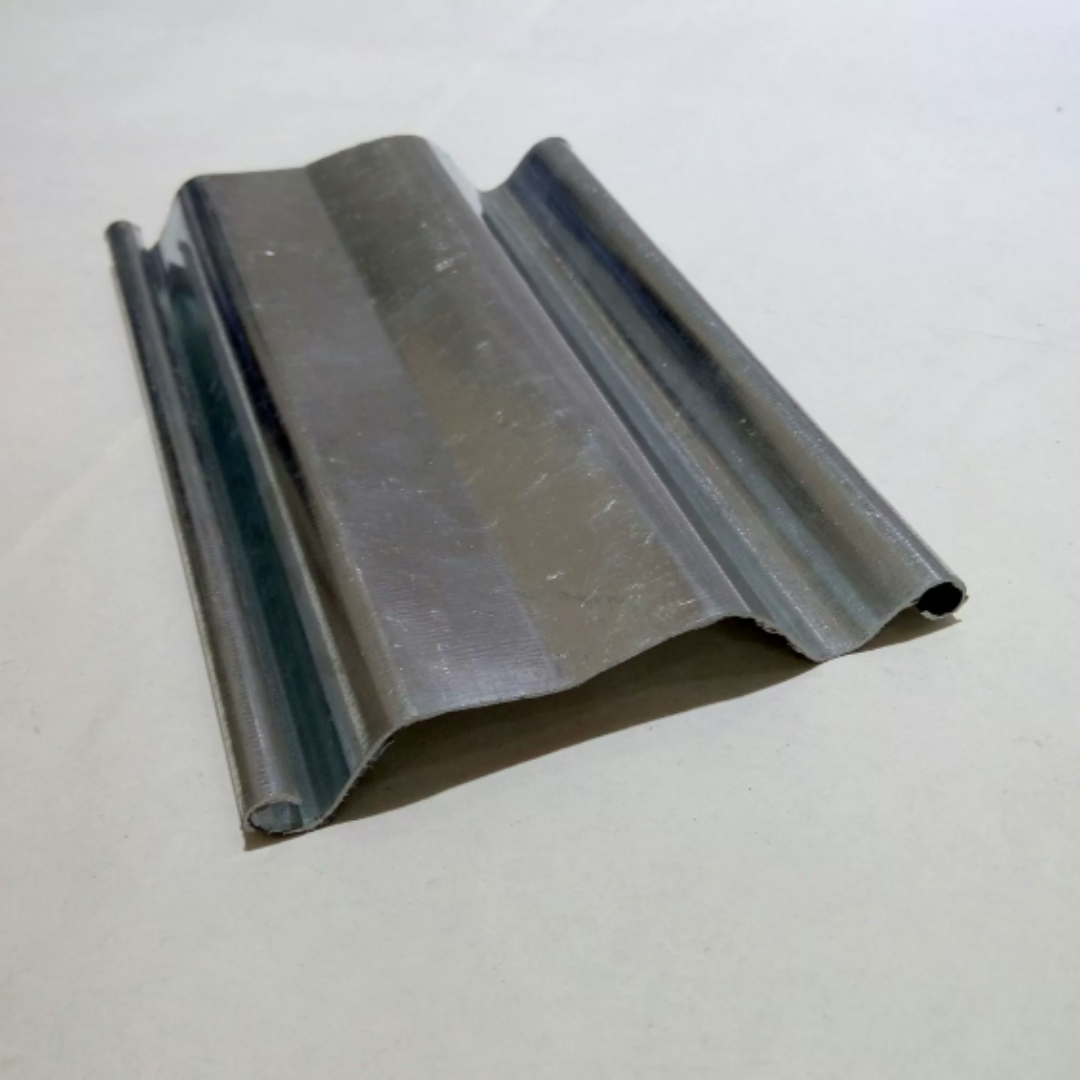
3. Color Steel Slats (Galvanized Steel Slats)
Color steel slats are made from galvanized steel with a colored coating, offering a balance of affordability and durability.
Key Parameters
Base Material: Galvanized steel (zinc layer ≥20μm).
Coating: Polyester (PE), fluorocarbon (PVDF), etc., affecting weather resistance.
Thickness: 0.3mm–0.8mm, with industrial doors up to 1.0mm.
Advantages
Cost-Effective: More economical than aluminum or stainless steel.
Moderate Strength: Suitable for basic security needs.
Color Variety: Customizable colors through coating.
Applications
Warehouses, logistics centers
Small shops
Temporary construction barriers

4. Transparent/Semi-Transparent Slats (Polycarbonate or PVC)
These slats use light-transmitting materials, ideal for spaces requiring natural light or display purposes.
Key Parameters
Material: Polycarbonate (PC) or PVC; PC offers better impact resistance.
Light Transmission: 70%–90%, with frosted options for privacy.
Thickness: 1.5mm–3.0mm; PC slats are more impact-resistant.
Advantages
Natural Lighting: Reduces indoor lighting needs, saving energy.
Lightweight: Suitable for manual roller shutters.
UV Resistance: PC material prevents UV degradation.
Applications
Storefront displays
Sunrooms
Parking lot entrances

5. Fireproof Slats (Composite Metal + Fireproof Core)
Fireproof slats feature a multi-layer structure with fire-resistant fillers to achieve flame retardancy.
Key Parameters
Fire Rating: Class A (non-combustible), Class B (flame-retardant), with 30–120 minutes of fire resistance.
Structure: Double-layer steel with rock wool or aluminum silicate fiber filling.
Thickness: 40mm–80mm; thicker slats offer better fire resistance.
Advantages
Fire Resistance: Slows fire spread, enhancing safety.
Sound and Heat Insulation: Filler layers reduce noise and heat transfer.
Applications
Chemical plants, gas stations
High-rise building fire compartments
Data centers

6. Silent Slats (Noise-Reducing Structure)
Silent slats incorporate special designs (e.g., rubber seals, multi-layer composites) to minimize operational noise.
Key Parameters
Noise Level: ≤50 dB (standard slats: 60–70 dB).
Structure: Nylon guide rollers and noise-absorbing strips between slats.
Advantages
Quiet Operation: Ideal for residential areas or nighttime use.
Reduced Wear: Noise-reducing design decreases rail friction, extending lifespan.
Applications
Residential garages
Hospitals, schools
High-end homes
FAQ (Frequently Asked Questions)
Q1: How to choose between 201, 304, and 316 stainless steel slats?
A: 201 is budget-friendly for dry inland areas; 304 suits most general environments; 316 is designed for high-corrosion areas like coastal or industrial zones.
Q2: How to select the right thickness for roller shutter slats?
A: Residential: 0.8mm–1.2mm; commercial: ≥1.2mm; industrial: ≥1.5mm.
Q3: Are transparent slats secure?
A: Polycarbonate (PC) is impact-resistant but less secure than metal slats; suitable for low-risk areas.
Q4: Do fireproof slats really work?
A: Yes, certified fireproof slats can resist flames for 30–120 minutes, depending on the fire rating.
Q5: How to reduce roller shutter noise?
A: Opt for silent slats or install nylon guide rollers and lubricate the chain regularly.
Recommended Products


up to dateNorway Automatic Door Accessories
- Safety Edge Sensor for Rapid Roll Door Anti-Crushing Protection
- High-Speed Door 0.75KW Servo Motor Control Box Set – Reliable & Efficient Drive Solution
- 1.5KW Servo Motor & Control Box Combination - High-Efficiency Drive System for Industrial Doors
- Industrial Door Zippers & High Speed Door Zippers - Durable Industrial Door Accessories
- 0.75KW High-Speed Door Servo Drive System - Reliable & Energy-Saving Industrial Solution
- Manufacturers Foot Pedal Activator & Safety Beam Photocell Barrier Sensor for Medical Sliding Doors
- Industrial Door Zippers & High Speed Door Zippers - Durable Industrial Door Accessories
- AOK-AC123 Electric Curtain Remote Control - Wireless Design with Wear-Resistant Acrylic Crystal Pane
- Permanent Magnet AC Synchronous Servo Motor with Worm Reduction Mechanism for High Speed Door
- Precision Synchronous Servo Motor for High-Speed Door – Worm Gear Reduction
- Durable PVC Fast Rolling Door Fittings for Enhanced Security
- Automatic Repair of Zipper Door Plastic/Polymer Rails
- Smart Automatic Door Sensor for Fast Rolling Access Control
- Soft Fast Gate Control System 1.5kw Servo Motor and Control Box
- Automatic Access Control Square Surface Mount Infrared Non-Contact Switch
- Explosion-Proof Reinforced Self-Limiting Electric Heating Belt
- Explosion-Proof Shielded Self-Controlling Temperature Electric Heating Belt
- Heating Belt for Anti-Freezing, Heating and Heat Preservation of Cold Storage Doors
- 40W flame retardant explosion-proof self-limiting electric heating belt
- Safety Beam Sensor Use for Automatic Door
