

Selection of Fire Door Panel Materials: A Comprehensive Guide
Key Takeaways
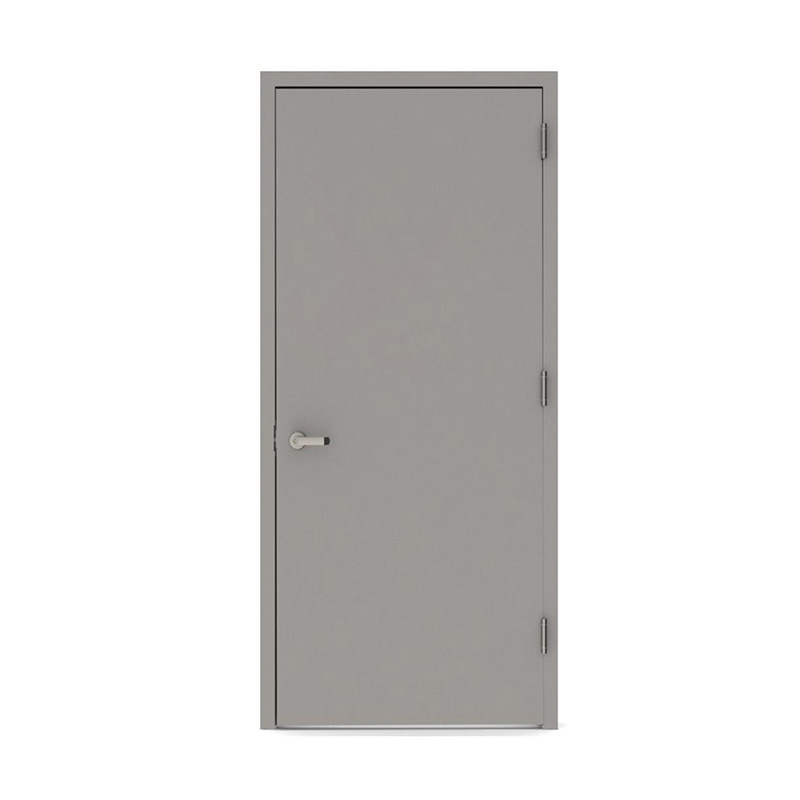
Steel Panels: 0.8-1.5mm galvanized steel sheets with 30-120 minutes fire resistance, suitable for 90% of civil and industrial applications.
Wooden Fireproof Panels: Made from flame-retardant treated pine or birch, offering aesthetic appeal for hotels and offices with high decorative requirements.
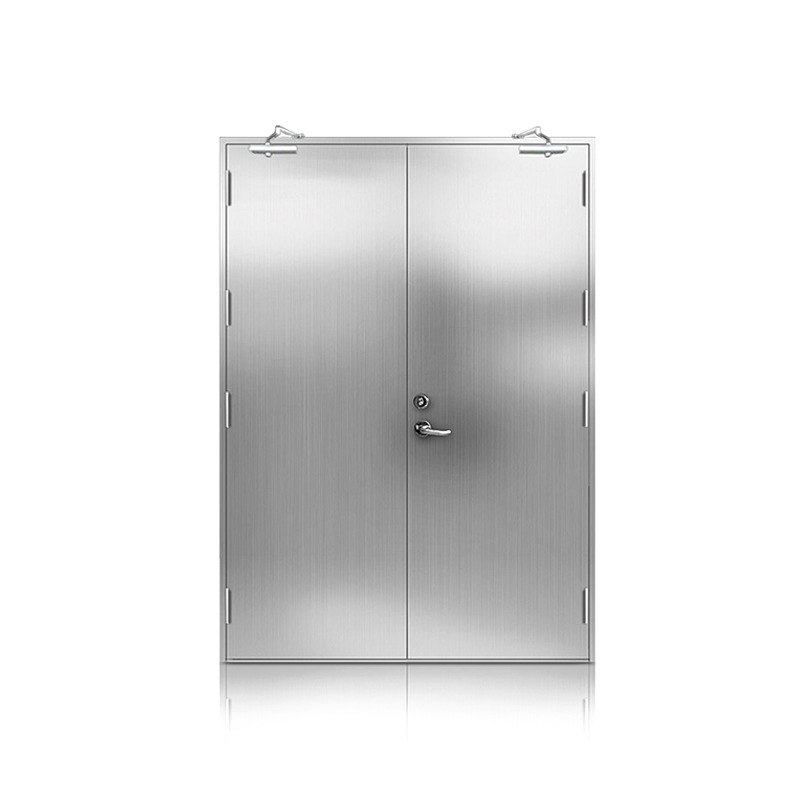
Stainless Steel Panels: 304/316L stainless steel with superior corrosion resistance, ideal for chemical plants and coastal areas.
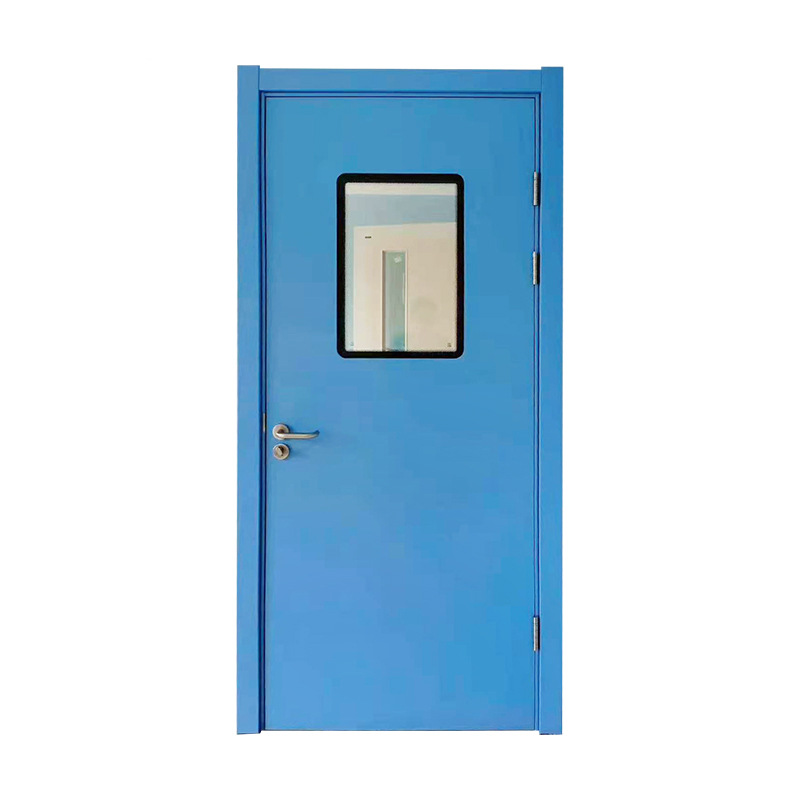
Composite Glass Panels: Fire-resistant glass with metal frames, providing over 70% light transmittance and 60-minute fire resistance for emergency exits.
Ceramic Fiber Panels: Withstands 1600°C, designed for extreme environments like power plants and steel mills.
1. Steel Panels: The Most Versatile Option
Material Properties:
Base material: Cold-rolled galvanized steel sheet (zinc coating ≥60g/m²), thickness 0.8mm (Grade C) to 1.5mm (Grade A).
Surface treated with epoxy powder coating, passing 2000-hour salt spray test without corrosion.
Performance Advantages:
Fire resistance correlates with thickness: 1.0mm panels pass 60-minute fire test (GB12955 standard).
Impact resistance reaches 1.5kJ/m², twice that of wooden doors.
Low lifecycle maintenance costs, suitable for large-scale applications.
Typical Applications:
High-rise residential stairwells (1.2mm panel with perlite filling).
Underground parking lots (1.0mm panel with moisture-proof coating).
2. Wooden Fireproof Panels: Balancing Aesthetics and Safety
Treatment Process:
Core wood undergoes vacuum-pressure treatment with flame retardant, achieving oxygen index ≥32% (vs. 18% for regular wood).
Surface veneers like walnut or cherry, with formaldehyde emission ≤0.05mg/m³ (EN717-1 standard).
Applications:
Luxury hotel guest rooms (with automatic door closers).
Historical building renovations (requiring visual harmony).
3. Stainless Steel Panels: Solution for Extreme Environments
Material Types:
304 Stainless Steel: Contains 18% Cr and 8% Ni, suitable for general corrosive environments.
316L Stainless Steel: With 2% Mo, improves acid/alkali resistance by 50%.
Key Parameters:
Thickness: 1.2-2.0mm, thermal conductivity 16W/(m·K) (vs. 45W/(m·K) for steel).
Service life exceeds 25 years, 1.6 times longer than galvanized steel.
Case Examples:
Seafood market cold storage doors (316L with low-temperature seals).
Chemical lab explosion-proof doors (resistant to 98% sulfuric acid).
4. Composite Glass Panels: Transparent Fire Protection
Structure Design:
Double-layer cesium-potassium fireproof glass (6mm+6mm) with stainless steel frame.
Light transmittance 72%-85%, UV blocking ≥99%.
Performance Verification:
Maintains integrity for 60 minutes with backside temperature ≤180°C.
Sound insulation: 35dB (at 500Hz frequency).
Innovative Uses:
Hospital ICU observation windows.
Shopping mall fire compartments (with wayfinding function).
5. Ceramic Fiber Panels: Ultra-High Temperature Protection
Material Composition:
Alumina-silica fiber, density 220kg/m³.
Melting point 1750°C, thermal shrinkage ≤2% (tested at 1000°C).
Test Data:
Fire resistance: 240 minutes (GB/T9978 standard).
Thermal shock resistance: 20 cycles of 1100°C rapid cooling/heating without cracking.
Critical Applications:
Steel furnace operator cabins.
Spacecraft test chamber barriers.
6. Selection Decision Tree
Match materials to needs:
Standard fire protection → Steel panels (1.0mm)
Aesthetics priority → Wooden fireproof panels (Class B1)
Highly corrosive environments → 316L stainless steel
Visibility required → Composite glass panels
Extreme high temperature → Ceramic fiber
7. Frequently Asked Questions (FAQ)
Q1: Can wooden fire doors really resist fire?
A: Properly treated products form a carbonized insulating layer when exposed to fire. Tests show no flames on the unexposed side for 60 minutes, but prolonged moisture exposure may degrade effectiveness.
Q2: Why are glass fire doors common in hospitals?
A: Transparency reduces patient anxiety while meeting 60-minute fire separation codes. Must use cesium-potassium fireproof glass (not tempered glass).
Q3: How much heavier are stainless steel doors vs steel doors?
A: Approximately 25% heavier due to higher density, requiring reinforced hinges (load capacity ≥80kg).
Q4: Can ceramic fiber doors use regular locks?
A: No, they require high-temperature locks (operating temperature ≥1000°C). Standard locks fail at 300°C.
Recommended Products


up to dateBelarus Automatic Door Accessories
- Precision Synchronous Servo Motor for High-Speed Door – Worm Gear Reduction
- High Speed Door Fast Door Servo Motor Permanent Magnet AC-Synchronous Servo Motor with Worm Reductio
- High Speed Door Zippers Industrial Door Zippers
- High Speed Door Zippers Industrial Door Zippers
- 1.5KW Servo Motor & Control Box Set - High-Performance Drive System for Industrial Doors
- 0.75KW Servo Drive System for High-Speed Doors - Reliable & Energy-Efficient Solution
- 0.75KW Servo Motor Control Box Set – Efficient and Stable High-Speed Door Drive Solution
- AOK-AC123 Electric Curtain Wireless Remote / Wear-Resistant Acrylic Crystal Panel Remote
- Manufacturers Foot Pedal Activator Safety Beam Photocell Barrier Sensor For Medical Sliding Doors
- Safety photoelectric switch for high-speed door sensors
- Durable PVC Fast Rolling Door Fittings for Enhanced Security
- Automatic Repair of Zipper Door Plastic/Polymer Rails
- Smart Automatic Door Sensor for Fast Rolling Access Control
- Soft Fast Gate Control System 1.5kw Servo Motor and Control Box
- Automatic Access Control Square Surface Mount Infrared Non-Contact Switch
- Explosion-Proof Reinforced Self-Limiting Electric Heating Belt
- Explosion-Proof Shielded Self-Controlling Temperature Electric Heating Belt
- Heating Belt for Anti-Freezing, Heating and Heat Preservation of Cold Storage Doors
- 40W flame retardant explosion-proof self-limiting electric heating belt
- Safety Beam Sensor Use for Automatic Door
